Showing posts with label provincial carnivals. Show all posts

Tuesday, February 11, 2014

275. Carnival Beauties: MAGDA I, Queen of the 1928 Pasay Carnival

QUEEN MAGDALENA I. 1928 Pasay Carnival

Pasay was one of the 4 original cities of Manila. Due to its proximity and strategic location to Manila, it enjoyed brisk economic and commercial growth during the American Occupation. Spurred by the petit fairs held everywhere in the big city of Manila, Pasay launched its own Pasay Carnival on December 1928, with Queen Magda I, reigning as royalty at the fair.

Wednesday, January 22, 2014

273. Queen of the 1929 Negros Oriental Carnival: VICTORINA ANTONIO

 V FOR VICTORY. Queen Victorina I, the fair queen of Negros, as she looked at her coronation night.

In 1929, Negros Oriental held a provincial fair to celebrate their foundation day and to mark their prosperity and progress, primarily driven by their sugar industry. Chosen to reign as was the lovely Victorina Antonio. As Queen of the Negros Oriental Carnival Fiesta, she ruled over 70,000 people for two week of festivities.


Thursday, December 19, 2013

270. 1929 SAN PABLO PROVINCIAL FAIR

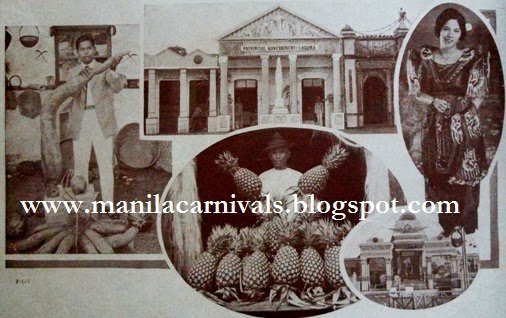
SCENES FROM SAN PABLO FAIR OF 1929

Proofs of provincial progress are depicted in these pictures from the community of San Pablo in Laguna, which celebrated its own fair in 1929. Here, one can see a representative San Pablo beauty. Extraordinary San Pablo pineapples and arrow root, and two specimens of San Pablo architectural skills: pavilions in the last fair held in that city.

Wednesday, December 11, 2013

269. 1934 BACLAYON (BOHOL) PETIT FAIR

BOHOLANA'S BEST. The Queen of the 1934 Baclayon Petit Fair and her royal court.

Queen Cresencia I (Cresencia Ginete) reigned as Queen of the Baclayon (Bohol) Fair with her court: Hospicia Valeroso, Agripina Oppus, Cresencia Real, Catalina Pates and Cornelia Talip. Previous to this, the only known Miss Bohol ever to participate in the Manila Carnivals was Ascension Gaviola, Miss Bohol 1926, who joined the 1st Miss Philippines search that year.

Tuesday, October 22, 2013

263. THE 1924 CAPIZ PETIT CARNIVAL

CARMEN OF CAPIZ. The Queen of the 1924  Capiz Petit Carnival and her royal retinue, pose during the coronation night that duplicated the festive air of the national carnival in Manila.

Not to be outdone, the province of Capiz held its own carnival with opulence and gaiety that rivalled that of the capital city. It was a fortuitous event as their native son, Representative Manuel A. Roxas had, by 1921, married Trinidad de Leon, herself, a former Manila Carnival Queen. Roxas's political stature would soon rise, becoming a Speaker of the House for 12 consecutive years, and eventually elected as the country's fifth President.

The 1924 Capiz Petit Carnival had a certain Carmen I as Queen. There was to be another Capiz Carnival the next year, held on December of 1925. The next year, Capiz sent its first representative to the 1st National Beauty Contest of the Manila Carnival, in the person of Rosario Picazo.

Tuesday, October 8, 2013

261. Carnival Album: MISS MINDANAO 1936 & MISS MACABEBE

MACABEBELLES TWO. Miss Mindanao of 1936, Cleofe Balingit lends her royal presence to the Garden Day festivities in her town.

Reigning Miss Mindanao 1936, Cleofe Jayme Balingit, and her town mate, Miss Macabebe 1936, presided over the festivities of the Macabebe Garden Day, held on 29 February 1936.

Balingit, backed by her newspaper sponsor, "Ing Catimawan", barged into the winning circle by placing 4th to Miss Philippines 1936, Mercedes Montilla. She was a popular beauty official of her town, welcoming VIPs to participating in local events like this one.

After her reign, she made a name for herself as a Red Cross volunteer, and undertook many socio-civic causes.


Tuesday, September 17, 2013

258. REMEDIOS FERRER, Miss Mindanao, 1934 Cebu Carnival

MUSE OF MINDANAO. Remedios Ferrer and her Consort, in authentic Muslim costumes at her coronation.

The Carnivals of Cebu replicated everything that the big carnival of Manila had, right down to the naming of the runners-up as Miss Luzon, Miss Visayas and Miss Mindanao, respectively. In 1934, the Miss Mindanao title was awarded to Remedios Ferrer.

Remedios Ferrer, Miss Mindanao of the 1934 Cebu Carnival and Fair. Miss Ferrer is well-known in Visayan society circles. She wears the typical Muslim costume in this photo from Graphic Magazine.

Tuesday, September 3, 2013

256. Queen of the 1938 Tuguegarao Carnival: HERMINIA AQUINO

CAGAYAN LOVELY. Crowned queen, Herminia I, 1938 Carnival Queen of the Tuguegarao Fair.

Cagayanons have been holding provincial carnivals in their province since 1926, and the events have been held usually in Aparri. Not to be outdone, the capital town of Tuguegarao started to mount its own petit fair, in the 1930s.

The royal elect in 1938, Her Majesty, Queen Herminia I (Herminia Aquino) reigned at the Tuguegarao Petit Carnival held from Aug. 10-20.

Her princesses included Rosalinda Olivas and Rosario Escalambre. The King Consort is Henry Kanaga, and engineer in the local office of the Bureau of Public Works.

Thursday, June 27, 2013

250. Queen of the 1929 Tayabas Carnival: CONSUELO E. LIM

CHOLENG'S CHARM. Consuelo Lim poses for her official photo as candidate of the 1929 Tayabas Carnival.

 Inspired by the victory of their local girl, Luisa Fernandez at the 1927 Manila Carnival (she represented Manila though),  Tayabas provincial officials put up their own petit carnival in 1929 to show the progressive strides the large province has achieved since the start of the American colonization. It was also an opportunity to bring out the province's fairest for all the world to see.

The beautiful representative from the town of Calauag, 19 year old Consuelo "Choleng" Eclavea Lim, emerged victorious as the provincial queen of the Tayabas Carnival. She was a student of Centro Escolar de Senoritas when she was elected. She later became the 2nd wife of the first Quezon City mayor, Tomas Morato and former mayor of Calauag, Tayabas (now Quezon).  Manuel "Manoling" Morato is her son.


Monday, June 17, 2013

249. Queen of the 1939 Bacolod Carnival, VIRGILIA C. ARANETA

BACOLOD'S BELLE OF THE BALL. Miss Virgilia C. Araneta.

Virgilia C. Araneta of Bacolod City reigned as Queen of the 1939 Bacolod Carnival which was held from April 8-25, 1939.

The Aranetas of Negros are a prominent family of revolutionary patriots, government leaders, agriculturists and business maven.

Friday, May 31, 2013

247. Queen of the 1939 Iloilo Carnival: EVELINA GARGANERA

ILONGGA CHARMER. Evelina Garganera of Jaro, rules as the 1939 Iloilo Carnival Queen.

Miss Evelina Garganera of Jaro, Iloilo, the queen-elect of the long-running Iloilo Provincial Exposition and Fair, 1939 edition. The annual carnival was held from 1-19 April, 1939. Evelina was also the year's Queen of the Jaro Carnival.

Tuesday, April 30, 2013

244. THE 1914 CEBU CARNIVAL

 THE CEBU CARNIVAL COURT 1913-1914. Queen Enriqueta Aldanese, a mestiza beauty from Sibonga, Cebu had the honor of being the first Cebu Carnival Queen. She also was the muse of Dia Espana.

The very first Cebu Carnival was held over the Christmas holidays of 1913. It was organized by Jose Nolasco who tried to replicate the same successful elements of the national carnival--even going to the extent of hiring the same company--Churchill and Tait--that provided lavish program entertainment--from circus acts, acrobatics and exciting carnival rides. There were also decorated booths and pavilions that showcased Cebu's progress in areas of commerce, agriculture and various industries. The pioneering provincial event was staged just 5 years after the first Manila Carnival, and was held at the Fuente Osmena. The coronation of Queen Enriqueta Aldanese de Lasso de Vega culminated the festivities. The first Carnival Queen of Cebu eventually became a national royalty, reigning as the Queen of the 1918 Manila Carnival.

Thursday, November 15, 2012

232. 1935 Queen of the Albay Carnival: TERESA BARRANACEA


Beauties and consorts of the 1935 Albay Carnival and Industrial Fair, led by Queen-elect Teresa Barranecea (Queen Teresa I) and her King Consort Lt. Artemio Soriano.


Princesses and escorts include Priscilla Acuna, Carmen Palomo, Eustaquio Jimenez and R. Mirasol.

Wednesday, November 7, 2012

231. Queen of the 1933 Iloilo Carnival: MARIANITA CARAZA


Her Majesty, Marianita Caraza and her court of honor at the throne of the 1933 Iloilo Carnival. From left to right: Consort Emilio Escares, princess Susing Rocha, the Queen, King Consort, Boy Opisso (son of Judge Opisso), Princess Lourdes Rivera and consort Vicente Borromeo.

Wednesday, September 26, 2012

228. Queen of the Iloilo Carnival : AIDA KILAYKO


In one of the earliest petit fairs of Iloilo, the lovely Aida “Aiding” Kilayko reigned as the 1925 queen. Her parents were Eugenio Copa Kilayko and Celsa Lizares, both from landed families of Talisay, Negros Occidental, who owned large sugar haciendas and prosperous farm holdings. Aida was educated at the Assumption College in Iloilo, and excelled in piano. As a young member of the “buena sociedad Ilongga”, Aida was also known for being a cultured and refined young woman.


After her coronation as Iloilo’s carnival queen, she was back in Manila to continue her Pharmacy course at the Centro Escolar de SeƱoritas. By December 1925, she was in the front page again as one of the winners of Philipine Free Press’ search for the 4 most representative types of “Bellezas Filipinas”. Over two thousand pictures were received as entries of the popular Manila paper; these were whittled down to 72, then 24 finalists. A judging panel comprising of artists Fabian de la Rosa, Guillermo Tolentino, Fernando Amorsolo and Jorge Pineda chose the winners, headed by Manila Carnival contestants Rosario Panganiban, Salud Austria, Margarita Lacson and Aida Kilayko, who placed third. She won a gold panuelo pin for her win.

“Aiding” later married lawyer Julio Hernaez, whom she outlived. They had 4 children: Corazon, Maria Fe, Julian Jr. and Susan.

Wednesday, September 12, 2012

226. THE 2ND NUEVA ECIJA CARNIVAL OF 1927

QUEEN AMPARING I. The queen-elect of the 2nd Nueva Ecija Carnival of 1927, held at Cabanatuan. However, the one who got to go to Manila for the Miss Philippines contest was Julita Matias.

Nueva Ecija, one of the rice and sugar-producing provinces of Central Luzon, was an early supporter of the Manila Carnival. Proud to showcase its achievements especially in the field of agriculture, the provincial government put up exhibition booths in the early years of the Carnival (1908-1909). Some Nueva Ecijanas also figured in the national search for the Manila Carnival Queen; Pacita Bantug de Guzman of San Isidro came close to winning the 1912 crown when she placed 2nd to Paz Marquez. The province was also represented in 1926 (candidate unknown) and in 1927 by Julita Matias.


Gripped with Carnival fever, Nueva Ecija soon started holding its own petit carnivals beginning in 1926. In 1927, the 2nd Nueva Ecija Carnival was staged, capped with the coronation of Queen Amparing I, as the festival royalty.

Sunday, July 8, 2012

219. Carnival Entertainment: COMPARSAS DE CARNAVAL

ZAMBOANGA CARNIVAL, 1923. A group of performers from the Center of Agriculture.

The throngs of people who flocked to the Carnival were treated every night with all sorts of spectacular entertainment—danzas (dances), themed balls, music, circus acts and acrobatics. There were just too many nights to fill over a period of two weeks—the 1908 Carnival alone featured three balls that were livened up with regional dances performed right at their national pavilions with their respective flags.

The best performing groups (comparsas) were recruited by the provincial organizers to provide musical entertainment and dance interludes. Scouring the schools for the best dance and drama groups, the chosen performers were carted off to Manila to show off their terpsichorean talents to the delight of the Carnival crowd. They often aligned their performances with the visual theme of the Carnival—Hindu-Arabic, Grecian, Russian, Fantasy, Filipiniana.

COMPARSAS LAS BATURBOS, Ilocos Sur Carnival 1923

Folk dances were staged on the ballroom in the center of the Hippodrome—measuring 300 ft. x 100 ft. The capacious dance floor was outfitted with first class wood made “to shine like crystal”. The enclosed area was defined by a wall with mural paintings done by the artist Robert McGreer and illuminated with electric bulbs.

COMPARSAS BALINTAWAK, Ilocos Sur Carnival, 1923

The production numbers grew more elaborate as the years passed; in 1929, during the reign of Pacita delos Reyes, aside from the Comparsas Night, there was a separate tribute prepared by her proud university called University of the Philippines Night, in which students rose to the occasion to stage “Pageant of Agriculture”, memorable for its scenario written by Carlos P. Romulo and its music supplied by the U.P. Conservatory of Music.

The entire university gave its all-out support and student earned P.E. credits for their participation in the evening spectacle. In no time at all, provincial carnivals were including performances by local comparsas, and a few of their productions are captured in these vintage souvenir photo postcards from the said events.

GYPSIE DANCERS, Camiling Petit Carnival, Tarlac, 1930.

Saturday, February 25, 2012

203. THE 1923 ZAMBOANGA CARNIVAL

VAYA ZAMBOANGA! The first ever provincial carnival of Zamboanga was held in 1923, officially known as the Zamboanga Carnival and Industrial Fair.The big event, which had a distinctive Indo-Malayan motif, was widely publicized nationally. Here, the royalties of the carnival pose for their official picture.

The first ever Zamboanga provincial carnival was undertaken from 15-23 December 1923 and was officially dubbed as the Zamboanga Carnival and Industrial Exposition. Espousing the same spirit as the national carnival, the event aimed to highlight the contribution of the local industries to the vibrant provincial economy as well as to showcase the beauty of Zamboanga culture.

Local social clubs like the Red Rovers spearheaded the search for the carnival royalty and that year, a local deep-set eyed beauty was elected as a Sultana. Her court, dressed as Malayan majesties, consisted of a Sultan, 7 charming princesses, 6 fez-wearing princes, 6 courtiers and two boy pages.

There were several other editions of the Zamboanga Carnival, with interest peaking in 1926, with Carmen Fargas’ unprecedented victory at the Manila Carnival Queen quest. As Miss Zamboanga of that year, she was chosen as Miss Pearl of the Orient Seas. The last pre-war Zamboanga Carnival was held in 1934.

Wednesday, February 1, 2012

200. 1924-1925 ANGELES CARNIVAL

QUEEN OF THE ANGELES CARNIVAL OF 1924. Rosario Hernandez Panganiban of Macabebe, was, at one time, a resident of Culiat. The multi-titled Charing remains the most celebrated beauty of Pampanga to this day. Dated Aug. 1924.

The town of Angeles, by the 1920s was enjoying some relative prosperity, a far cry from the wild land that it once was in 1796, when Don Angel Pantaleon de Miranda and wife Rosalia de Jesus, cleared the place known then as Culiat. As part of San Fernando, Culiat was recognized as a town in 8 December 1829, and from that moment on, there was no stopping Angeles’s progress.

In 1920, the airport at Fort Stotsenburg was opened, and two years after, the 1st modern ice plant was put up in the town. In 1923, 20th century progress came to Angeles when the Angeles Electric Light and Power Plant started its operations. Indeed, things were looking up for the town and when the Americans put up the 1st national fair that was the Manila Carnival, Angeles was quick to support the festivities, fielding its best band to the music competitions which eventually won the top prize.

In August 1924, a local town carnival was held, and we only have a handful of pictures documenting the event. Surprisingly, the event was not reported in the historical compilations of Mariano V. Henson, who is acknowledged as the foremost historian of Angeles and Pampanga. Other municipalities of Pampanga were invited to set up booths and showcase their agricultural, commercial and industrial produce—just like the way things were done in the national carnival. The towns were also encouraged to send in their delegates to vie for the Angeles Carnival Queen.

Reigning as Queen of the Angeles Carnival was Pampanga’s most celebrated beauty queen, Rosario H. Panganiban of Macabebe. The Philippine Women’s College beauty would go on to clinch more important titles in the next two years—1926 Miss Philippines of Free Press and 1926 Miss Pampanga to the 1st National Beauty Contest. At her coronation, the lovely Charing was whisked around Angeles in a car, in a fancy floral parade.

Not much is known about the 1924 Angeles Carnival except the fact that there was a repeat the next year, in February of 1925. prefaced a bigger provincial event—the 1925 Pampanga Carnival—where Rosario, once again, reigned as queen.

Wednesday, September 7, 2011

186. 1927 DULAG CARNIVAL

THE 1927 DULAG CARNIVAL. Celebrating the beauty of Leytenas, under the American Regime.

1927 was the first and only time that a Miss Leyte was named to compete in the Manila Carnival search for Miss Philippines; the winner was Amelia Zialcita Romualdez, a cousin of Imelda Romualdez (Marcos). Her participation inspired municipalities to hold their own carnivals and elect their own royalties, even at a local level only.

One such town that held its own carnival festivities that same year was Dulag, a large and progressive coastal town of Leyte fronting the Leyte Gulf, just 36 kilometers from the provincial capital, Tacloban. Dulag was an important commercial hub in its heyday; ships from all over would dock at its port carrying merchants who traded their products for Philippine abaca, copra, tobacco, rice and wine with the natives. At one time, the shores ofDulag were lined with large warehouses filled with goods that were imported to foreign countries.

As a toast to its prosperity, the municipality organized its very own Dulag Carnival of 1927. Queen Teofila I and her retinue of princesses and escorts were elected to serve as the carnival royalties, as preserved in this rare photo. The details of the event as well as the background of the queen-elect have all but been lost to oblivion. But the 1927 Dulag Carnival must have been a grand and pompous event, complete with the Philippine-American trappings and trimmings of a royal coronation.

Ruined by the last World War, Dulag would rise again and earned the distinction as a “Liberation Town”. Many veterans still claim that it was in Dulag that Gen. Douglas MacArthur first landed upon his promised return—and not in Palo, Leyte as historians believed.